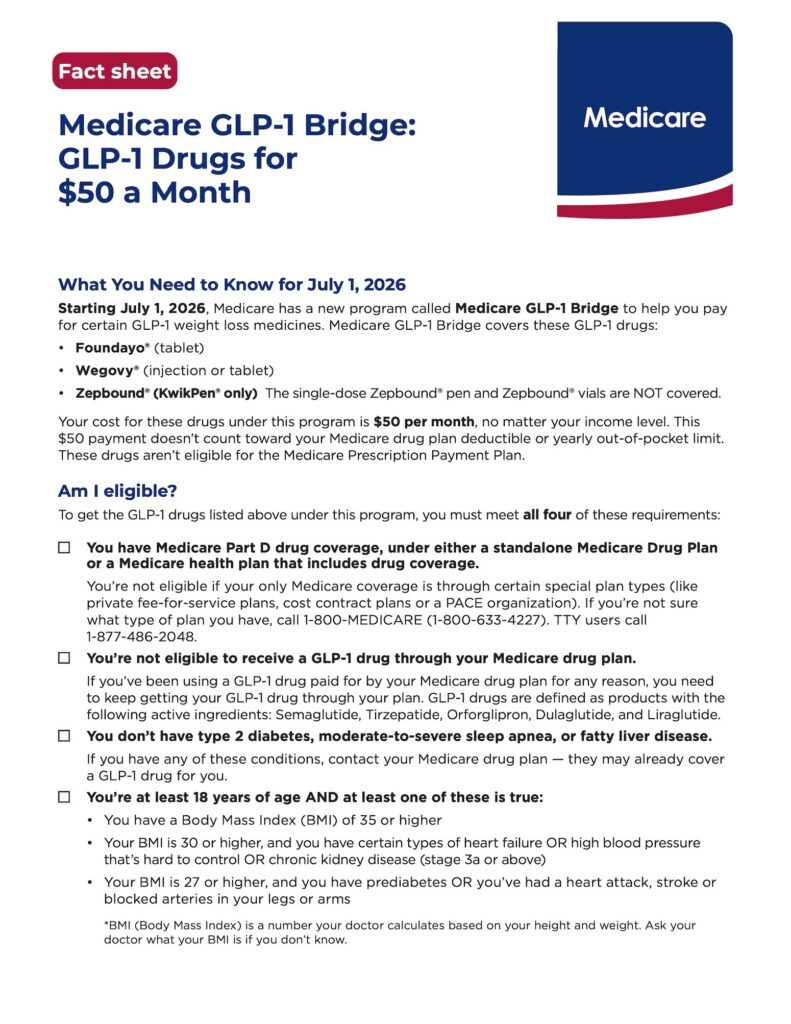
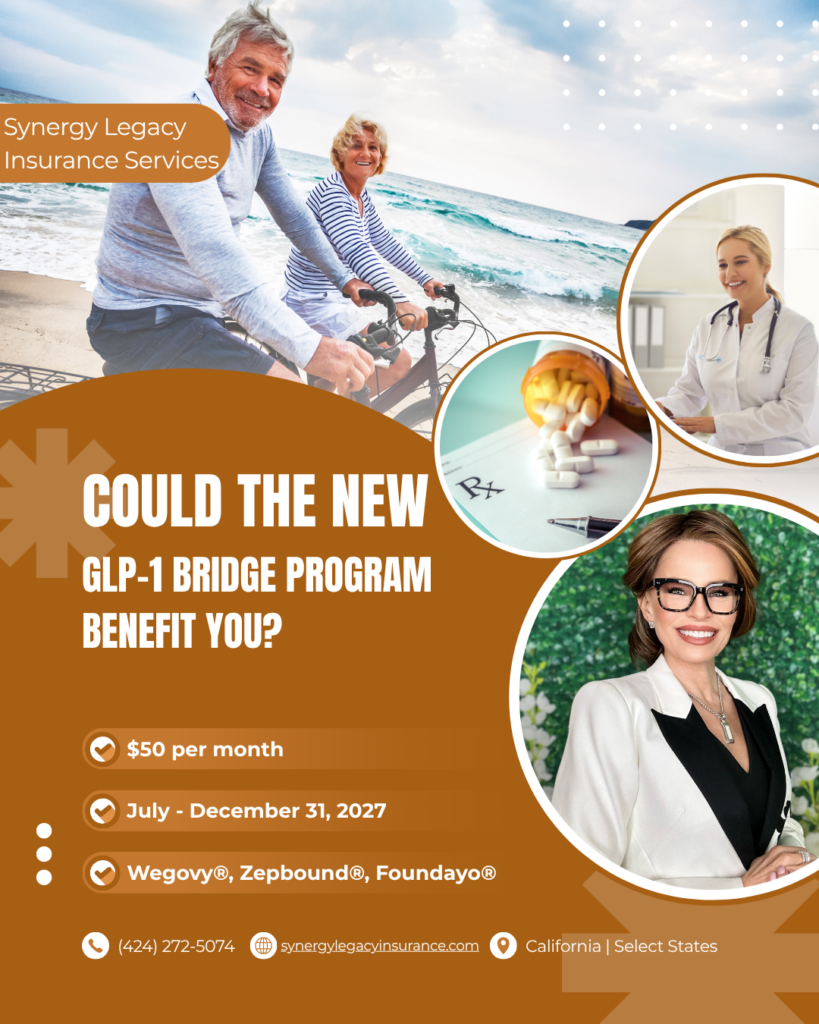
Beginning July 1, 2026, Medicare is launching a new temporary program that may help eligible beneficiaries access certain GLP-1 medications for just $50 per month.
For many people, this could make medications that were previously difficult or impossible to afford much more accessible.
What Are GLP-1 Medications?
GLP-1 medications are a newer class of prescription medications originally developed to help people manage blood sugar levels in Type 2 diabetes.
Researchers later discovered these medications could also help many people:
• lose weight
• improve blood sugar control
• reduce appetite
• feel full longer
• lower certain obesity-related health risks
Because obesity is closely linked to conditions such as heart disease, high blood pressure, kidney disease, stroke, and diabetes, these medications have become an important treatment option for many individuals under a physician’s care.
Recognizing the growing need, the Centers for Medicare & Medicaid Services (CMS) has introduced the Medicare GLP-1 Bridge Program to help certain Medicare beneficiaries gain access to these medications while Medicare continues evaluating long-term coverage options.
Why Is This Program Important?
For eligible Medicare beneficiaries, this program offers:
• Access to certain GLP-1 medications for $50 per month
• Coverage from July 1, 2026 through December 31, 2027
• A simplified pathway for people who currently do not qualify for GLP-1 coverage through their Medicare Part D prescription drug plan.
The program operates outside of your Medicare Part D drug plan.
That means:
• No Medicare Part D deductible applies.
• The monthly cost remains $50, regardless of dosage.
• The payment does not count toward your Part D out-of-pocket costs (TrOOP).
• The Low-Income Subsidy (Extra Help) does not apply to this program.

Who May Qualify?
This program may be available if you:
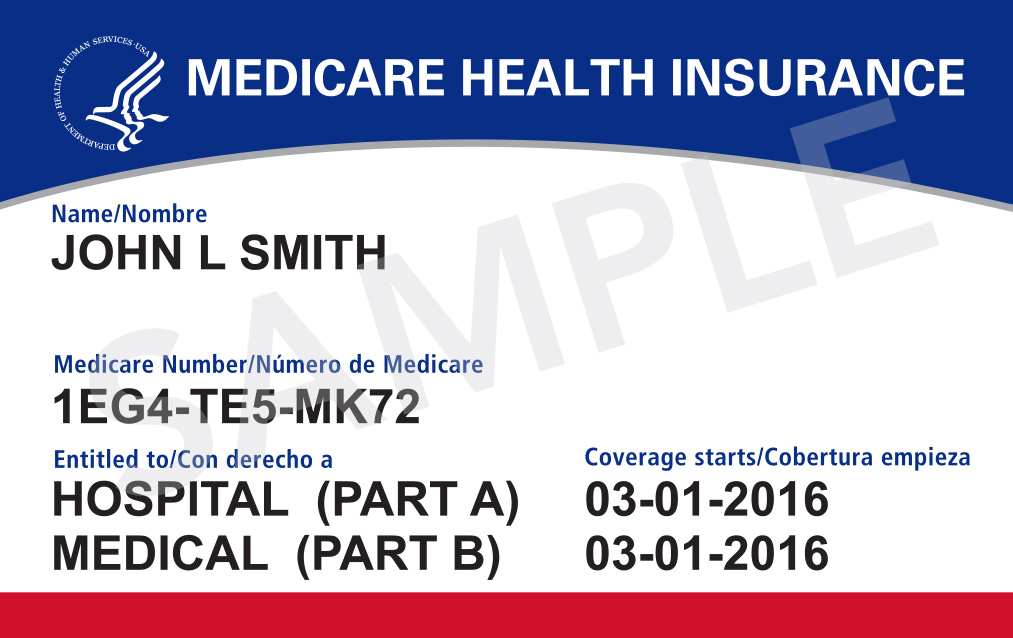
• Have Medicare Part D prescription drug coverage.
• Are at least 18 years old.
• Do not already qualify for GLP-1 coverage through your Medicare drug plan.
• Meet specific clinical guidelines established by CMS.
One of those guidelines is your Body Mass Index (BMI).
BMI is a calculation based on your height and weight that helps determine whether your weight falls within a healthy range.
Depending on your BMI, you may also need certain qualifying health conditions.
For example, you may qualify if:
- Your BMI is 35 or higher, or
- Your BMI is 30 or higher with certain qualifying conditions such as uncontrolled high blood pressure, heart failure, or chronic kidney disease, or
- Your BMI is 27 or higher along with certain medical conditions such as prediabetes, a previous heart attack, stroke, or symptomatic peripheral artery disease.
Already Receiving Coverage Through Medicare Part D?
This is one of the most important things to understand.
The Bridge Program is not intended to replace existing Medicare Part D coverage.
If you have one of the following medical conditions, you should continue working with your Medicare Part D prescription drug plan because you may already qualify for GLP-1 medication coverage through your existing benefits:
• Type 2 diabetes
• Moderate-to-severe obstructive sleep apnea (OSA)
• Certain forms of fatty liver disease (MASH)
• Established cardiovascular disease when the medication is prescribed to reduce the risk of major cardiovascular events
In other words, don’t assume you need the Bridge Program.
Your current Medicare drug plan may already provide coverage based on your medical diagnosis.
Which Medications Are Included?
At this time, CMS has announced coverage for:
• Wegovy® (injection and tablet)
• Zepbound® (KwikPen® only)
• Foundayo® (tablet)
It is important to know that not every GLP-1 medication is included.
For example, medications such as Ozempic® and Mounjaro® are generally prescribed for Type 2 diabetes and are typically covered differently under Medicare Part D rather than through the Bridge Program.

How Do You Apply?
If you believe you may qualify:
- Schedule an appointment with your physician.
- Your physician will determine whether you meet the CMS clinical guidelines.
- If appropriate, your physician will submit the required prior authorization directly to CMS.
- Once approved, you may obtain your medication through a participating pharmacy.
My Thoughts
As Medicare continues to evolve, new programs like this can create opportunities many people may not realize are available.
If you or someone you know has been wondering whether these medications might become more affordable under Medicare, this may be worth discussing with your physician.
As always, my goal is simply to keep you informed about important Medicare updates that may affect you or someone you care about.
Watch Dr. Oz Explain the Program: https://www.youtube.com/watch?v=_xtjXIoxwYk
For complete program details, visit the official CMS Medicare GLP-1 Bridge webpage.
CMS Resource: (Insert CMS Link)
https://www.cms.gov/medicare/coverage/prescription-drug-coverage/medicare-glp-1-bridge